Showing posts with label Science. Show all posts

World's Fastest Car: Supersonic Bloodhound Car

World's Fastest Car: Supersonic Bloodhound Car

Brought To you By:- WWW.PUNIAEDUHUB.COM


A supersonic racing car designed to run at a  speeds of 1,600mph is to be tested for the first time on Wednesday at cornwell airport runway.
Wing Commander Andy Green, who set the current record in the Thrust SSC in October 1997, will also be behind the wheel of the latest speed demon.
Runway trials will mark the culmination of a month of tests to prove the Bloodhound's systems - including a Rolls-Royce EJ200 jet engine sourced from a Eurofighter Typhoon.
The car, which has been assembled at Avonmouth near Bristol, will hit speeds of 200mph along Cornwall Airport Newquay's 1.7 mile-long runway, on October 26.
It will first undergo several days of tests to check the vehicle's bespoke air intake, fuel and electrical systems.
 Andy Green's will take first experience of driving the 13.5m long streamliner, which is made of more than 3,500 bespoke components.
Richard Noble, project director at Bloodhound SSC, said: "The runway trials at Cornwall Airport Newquay will be the biggest milestone in the history of the project so far.
"They will provide important data on the performance of the car and give us a first opportunity to rehearse the procedures we'll use when we go record breaking."
During the tests, the car will be powered by the jet engine and use wheels with pneumatic tyres from an English Electric Lightning fighter aircraft.
Bloodhound will then head to a desert venue in South Africa, where it is expected to reach 1,000 mph in 2018, covering a mile in just 3.6 seconds at full speed.
For the 1,000mph runs, Bloodhound will be fitted with three hybrid rockets which, when combined with the EJ200 engine, will produce 135,000 thrust horsepower.

दुनिया की सबसे तेज दौड़ने वाली कार -ब्लड हाऔंड सुपरसॉनिक कार


दुनिया की सबसे तेज दौड़ने वाली कार -ब्लड हाऔंड सुपरसॉनिक कार 
कार की स्पीड – 1600 किमी/घंटा      
लागत – 500 करोड़ , यूरो फाइटर जेट के इंजिन लगे है
पहले रेकॉर्ड – 1228 किमी/घंटा
ब्रिटेन मे निर्मित दुनिया की सबसे तेज दौड़ने वाली कार का बुधवार को रनवे पर टेस्ट किया जाएगा I इसके लिए इसे कार्न्वेल एयरपोर्ट पर लाया गया है I इसे डिज़ाइन किया है 85 साल के रॉकेट साइंटिस्ट रॉन एयेर्स ने I इसे चलाएँगे 55 साल के अंडी ग्रीन I अंडी ग्रीन एयर फोर्स मे पायलट रह  चुके है I टीम का दावा है की इस कार की स्पीड 1600 किमी/ प्रति घंटा है I करीब 3 किलोमीटर लंबे रनवे पर यह 350 किमी/घंटा की स्पीड से दोड़ेगी I अभी तक तेज स्पीड का रेकॉर्ड 1228 किमी/घंटा है I 19997 मे ये रेकॉर्ड इसी टीम ने बनाया था I ब्लड हाऔंड के दो चरणों मे 1247 किमी/घंटा और 1609 किमी/घंटा की स्पीड पकड़ने की बात कही जा रही है I प्रोजेक्ट की घोषणा 2008 मे हुई थी , लेकिन इस पर काम 2015 मे सुरू हुआ I

Healthy And Nutritious Food: Potato

Brought To You By:- WWW.PUNIAEDUHUB.COM

 Healthy And Nutritious Food: Potato:-The humble potato has fallen in popularity in recent years, due to the interest in low-carb foods.
However, the fiber, vitamins, minerals, and phytochemicals it provides can help ward off disease and benefit human health.
Potatoes were first domesticated in the Andes in South America up to 10,000 years ago. Spanish explorers introduced them to Europe in the early 16th century.
They are now the biggest vegetable crop in the United States (U.S.), where the average person eats 55 pounds, or 35 kilograms (kg) of potatoes every year. They are an important staple food in many countries around the world.
This MNT Knowledge Center feature is part of a collection of articles on the health benefits of popular foods.

Nutritious Value Of Potatoes:-

It also provides important nutrients, such as vitamin C, vitamin B6, and various minerals.
A 100-gram (g) or 3.5- ounce serving is a little more than half of a medium size potato. This much white potato, baked with skin, contains:
  • 94 calories
  • 0.15 grams of fat
  • 0 grams of cholesterol
  • 21.08 grams of carbohydrate
  • 2.1 grams of dietary fiber
  • 2.10 grams of protein
  • 10 milligrams (mg) of calcium
  • 0.64 mg of iron
  • 27 mg of magnesium
  • 75 mg of phosphorus
  • 544 mg of potassium
  • 12.6 mg of vitamin C
  • 0.211 mg of vitamin B6
  • 38 micrograms (mcg) of folate
Potatoes also provide niacin, choline, and zinc. Different varieties provide slightly different nutrients.
Sodium: Whole, unprocessed potatoes contain very little sodium, only 10 mg per 100 g (3.5 ounces), or less than 1 percent of the suggested daily limit. However, this is not true of processed potato products, such as French fries and potato chips.
Alpha-lipoic acid: Potatoes also contain a compound known as alpha-lipoic acid (ALA), which helps the body to convert glucose into energy.
Some evidence suggests that alpha-lipoic acid can help control blood glucose levels, improve vasodilation, protect against retinopathy in diabetic patients, and preserve brain and nerve tissue.
Quercetin: Quercetin, a flavonoid found in potato skin, appears to have an anti-inflammatory and antioxidant effect that protects the body's cells from damage by free radicals.
Flavonoids are a kind of phytonutrient, organic compounds that are believed to help protect against disease.
Antioxidants: Potatoes contain vitamin C, which acts as an antioxidant. Antioxidants may help prevent cell damage and cancer and promote healthy digestion and cardiovascular functions.
Fiber: The fiber in potatoes helps to maintain a healthy digestive system and circulation.
  

Health Benefits of Potatoes:-

1.Blood pressure

A low sodium intake is essential for maintaining a healthy blood pressure, but increasing potassium intake may be just as important. Potassium encourages vasodilation, or the widening of the blood vessels.
According to the National Health and Nutrition Examination Survey (NHANES), fewer than 2 percent of American adults meet the daily 4,700-milligram recommendation.
Potassium, calcium, and magnesium are all present in the potato. These have been found to decrease blood pressure naturally.

2.Heart health

The potato's fiber, potassium, vitamin C, and vitamin B6 content, coupled with its lack of cholesterol, all support heart health.
Potatoes contain significant amounts of fiber. Fiber helps lower the total amount of cholesterol in the blood, thereby decreasing the risk of heart disease.
Research based on the NHANES has linked a higher intake of potassium and a lower intake of sodium to a reduced risk of all-cause mortality and heart disease.

3.Cancer

Potatoes contain folate. Folate plays a role in DNA synthesis and repair, and so it prevents many types of cancer cells from forming due to mutations in the DNA.
Fiber intake from fruits and vegetables like potatoes are associated with a lowered risk of colorectal cancer.
Vitamin C and quercetin also function as antioxidants, protecting cells against damage from free radicals.

4. Digestion and regularity

The fiber content in potatoes helps prevent constipation and promote regularity for a healthy digestive tract.

5. Healthy Bone

The iron, phosphorous, calcium, magnesium, and zinc in potatoes all help the body to build and maintain bone structure and strength.
Iron and zinc play crucial roles in the production and maturation of collagen.
Phosphorus and calcium are both important in bone structure, but it is essential to balance the two minerals for proper bone mineralization. Too much phosphorus and too little calcium result in bone loss and contribute to osteoporosis.

6. Skin

Collagen is the skin's support system. Vitamin C works as an antioxidant to help prevent damage caused by the sun, pollution, and smoke. Vitamin C also helps collagen smooth wrinkles and improve overall skin texture.

7.  Immunity

Research has found that vitamin C may help reduce the severity and duration of a cold. Potatoes are a good source of vitamin C.


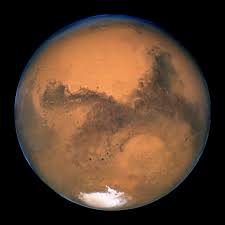
Scientist discovered :Mars has twisted magnetic tail

https://puniaeduhub.blogspot.in/


Scientists discovered says Mars Atmosphere and Volatile Evolution Mission spacecraft, which has been orbiting Mars since 2014, has been gathering data that will allow scientists to understand changes in the upper atmosphere of the Red Planet. It is known that Mars, billions of years ago, had atmosphere and water and could have supported life. It is now barren and cold.

What Mars now has is a thin atmosphere - and even this is at risk, say scientists who have discovered that the planet has a twisted tail. The process that created this tail could also allow some of Mars' already thin atmosphere to escape to space, researchers said on science news website Science Daily.

At a press briefing on October 19 at Utah during the annual meeting of the America Astronomical Society's Division for Planetary Sciences, Gina DiBraccio of Nasa's Goddard Space Flight Centre in Maryland, said, "We found that Mars' magnetic tail, or magnetotail, is unique in the solar system. It's not like the magnetotail found at Venus, a planet with no magnetic field of its own, nor is it like Earth's, which is surrounded by its own internally generated magnetic field. Instead, it is a hybrid between the two."

Science Daily reported: "The team found that a process called "magnetic reconnection" must have a big role in creating the Martian magnetotail because, if reconnection were occurring, it would put the twist in the tail."

Scientists discovered a newly formed star near the milky way galaxy


First time history, astronomers have discovered the location of a luminous light source on the opposite side of the Milky Way Galaxy, far beyond the galactic center. The source — a region of space where massive stars are being born — is located in a distant spiral arm, one of the large tentacles of gas that swirl around the middle of our galaxy. Knowing its location has allowed astronomers to trace the arm as it wraps around the center of the Milky Way, telling us more about the structure of the galaxy we live in.
It’s a significant discovery, since locating distant objects in our galaxy is an incredibly difficult process. The Milky Way is filled with interstellar dust that makes it nearly impossible to see any visible light coming from faraway sources. And our galaxy is incredibly big, stretching 100,000 light-years across. That means it takes a thousand centuries for light to cross from one end of the Milky Way to the other. Any radio waves coming from remote locations across the galaxy weaken considerably as they cross the vast distances on the way to Earth.


That’s why astronomers use special measurement techniques to figure out where things are in our galaxy. To find this specific star-forming region, scientists leveraged the Earth’s orbit around the Sun, observing the source’s radio waves from different vantage points as the Earth travels through the Solar System. Such a technique can help astronomers accurately measure the distance of a far-off object — it’s been used to do so many times before — but a galactic object this far away has never been measured before. “This is certainly the first source we’ve ever measured a distance that far by a factor of two,” Mark Reid, a senior radio astronomer at Harvard and author of a study in Science detailing this discovery, tells The Verge. “So it’s twice as far away as the previous record holder.”
Reid and his team weren’t looking for this light source in particular; they found it as part of an ongoing mapping campaign of the Milky Way. Over the last five years, the team has been measuring the distances of star-forming regions all over the galaxy to learn more about the structure of our cosmic neighborhood. And they’ve located up to 200 sources so far. The team has been looking specifically for these regions — dense clouds of gas and dust that form new stars — because such places are known to pop up in the arms of spiral galaxies. It’s thought that gases within the arms bump up against each and other and become so compressed that they give birth to new stars.But so far, all of the regions that the team has mapped have been in the general vicinity of our Solar System. They hadn’t found any sources far beyond the galactic center — the supermassive black hole at the middle of the Milky Way. That’s because it’s fairly difficult to map the galaxy from Earth. “Imagine you’re trying to make a map of a city, but you’re not allowed to leave home,” says Richard Pogge, an astronomer at Ohio State University, who wasn’t involved in the study, tells The Verge. “You go and look at distant lights and try to map out where the population of the city is. But up until now we’ve only seen downtown and mapped out a few of the suburbs.”

Nobel Prize in physics awarded to three scientists for the detection of gravitational waves

Nobel Prize 2017 in physics awarded to three scientists for the detection of gravitational waves

  Three researchers have been awarded the Nobel Prize in physics for their work in detecting gravitational waves — ripples in space and time that travel throughout our Universe. The recipients are Rainer Weiss, a physics professor at MIT, and Kip Thorne and Barry Barish, who are both physics professors at Caltech.
The trio are key members of LIGO, or the Laser Interferometer Gravitational-Wave Observatory — a scientific collaboration that made history when it announced last year the first ever detection of gravitational waves. Over a century ago, Albert Einstein predicted the existence of these waves in his theory of general relativity. He argued that every object in the Universe warps the space and time around it, and when an object moves, it creates ripples in this space-time — gravitational waves — a bit like ripples in a pond.LIGO boasts two specialized detectors in Washington and Louisiana, designed to pick up these ripples. Specifically, the observatories look for the gravitational waves stemming from violent mergers of super dense faraway objects, such as black holes or leftover stellar remnants known as neutron stars. When these bodies come together, they spin around each other rapidly, several times per second, before joining to make one incredibly dense object. It’s like a cosmic dance that creates gargantuan ripples in the fabric of space-time, which travel outward at the speed of light, and eventually reach Earth. By the time they reach our planet, the waves have greatly diminished, needing extremely sen
In February 2016, LIGO announced that its two observatories had detected the waves from black holes merging 1.3 billion light-years away for the first time ever. The discovery revolutionized the field of astronomy, giving scientists a new way to study the mysterious, dark objects that lurk in the distant Universe. LIGO has since detected three additional black hole mergers — and more announcements may come soon. A third European observatory, Virgo, has also detected one of the mergers, allowing researchers to locate the source of these waves more accurately than ever before. “We have unlocked this new window of the Universe, and we’re just starting to peek in,” says Laura Cadonati, a LIGO collaborator and professor of physics at Georgia Institute of Technology. “This discovery has been groundbreaking because it’s not the end of the path; we’ve really opened the door to new discovery.”


The Royal Swedish Academy of Sciences, which awards the Nobel Prizes, said that Weiss, Thorne, and Barish deserved the award specifically “for decisive contributions to the LIGO detector and the observation of gravitational waves.” Cadonati says that many within the collaboration “look up to them as the founders who started it all.” Weiss championed the idea of using miles-long lasers as the best way to detect gravitational waves on Earth, and the technology is a fundamental tool used in the LIGO detectors today. He also helped identify sources of background noise that might muck up detections. “He’s really been on the forefront of all the construction,” Cadonati tells The Verge. “He really was the one who made it happen.”
Meanwhile, Thorne is the reason why LIGO looks for mergers in the first place. Many scientists thought the explosions of stars would create the best waves for detection, but Thorne said that black holes or neutron stars rotating around one another would make the best sources for study.